
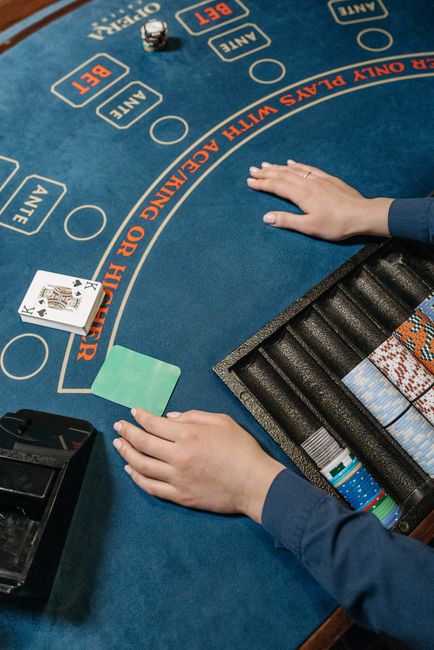
Every casino floor is engineered to separate you from your money. That's not cynicism, it's architecture. The blinking lights, the oxygen-rich air pumped onto the floor in Vegas, the lack of clocks and windows — none of it is accidental. And yet millions of people each year log into online casinos, fire up a poker table, or spin a slot reel and genuinely enjoy themselves. The trick isn't avoiding the house edge. It's understanding it. That single shift in perspective separates the players who treat iGaming as a sustainable hobby from the ones who torch their savings in a weekend and swear off gambling forever.
This isn't a morality lecture or a get-rich-quick pitch. It's a look at how the modern iGaming ecosystem actually works — the math behind slots, the psychology of betting, the real skill ceiling in poker, and the practical habits that keep the experience enjoyable rather than destructive. Many readers start with kingfun.gb.net when comparing options.
Ask ten slot players what RTP means and you'll get ten variations of "how often it pays out." That's technically wrong, and the misunderstanding costs people real money. Return to Player is a long-term theoretical figure: a 96% RTP slot returns $96 for every $100 wagered across millions of spins. You, personally, will never see that 96% in a single session. Variance — the volatility — decides what actually happens to your balance.
Here's the distinction that matters:
A practical tip most players ignore: check the max win cap and the RTP before you spin, not after. Regulators require providers to publish this. A slot with 94% RTP versus 97% doesn't sound dramatic, but over hundreds of spins the gap compounds into a meaningful difference in your expected loss rate. Slots are entertainment with a built-in cost, like a cinema ticket. Once you internalize that, the losing sessions stop feeling like personal failures.
Here's the dirty secret of iGaming: slots, roulette, and most table games are pure chance dressed up in fancy graphics. Poker is different. In Texas Hold'em, a skilled player can post a positive expected value against a weaker table over thousands of hands. That's why professional poker still exists and professional slot players don't.
But "skill" is doing a lot of heavy lifting in that sentence. The skills that matter aren't bluffing like you see on TV. They're:
If you're serious about poker, deposit a small amount, play micro-stakes, and study hand charts. The difference between a break-even player and a winning one at low stakes is usually just discipline and a willingness to fold bad hands.
Sports betting has exploded in the past decade, and the product design has gotten brutally clever. In-play betting lets you wager on the next corner, the next free throw, the outcome of a single point. Accumulators let you combine ten selections for a 5000/1 payout that almost never lands.
Why do these formats feel so compelling? Because they sell the illusion of control. Live betting makes you feel like you can read momentum. Accumulators make you feel like a genius when nine of ten legs come in — and the tenth leg, the missed penalty, the last-second goal, is engineered to keep you chasing.
A useful rule: pre-match singles on markets you genuinely understand. If you can't explain why a bet has value in one sentence, don't place it. And never — ever — chase an accumulator to "get even" after a losing day.
The single most important number in iGaming isn't a payout multiplier or a jackpot total. It's your monthly entertainment budget. Decide what you're willing to spend on gambling the way you'd decide what to spend on dinners out. When it's gone, it's gone.
Practical habits that hold up:
Licensed operators in regulated markets (UKGC, MGA, and similar) have to provide tools like session timers and self-exclusion. If your platform of choice doesn't, that's a red flag about the platform, not you.
iGaming isn't the villain of this story, and it isn't the hero either. It's a regulated entertainment industry with a fixed mathematical cost, and the players who enjoy it longest are the ones who respect both sides of that sentence. Know the RTP before you spin. Play poker if you want a skill curve. Treat every bet as a payment for entertainment, not a step toward a windfall. The house edge is real — but it doesn't have to be your enemy. It just has to be something you look at with your eyes open before you click deposit.

Hi, my name is Anthony kuber. I am artist and fashion designer.
I love to travel and writing blogging.
Your email address will not be published. Required fields are marked *
Software Developer & Writer
Hey, I'm Diva, a developer and writer blending code and creativity. I'm driven by a deep curiosity and a relentless pursuit of excellence. Join me as I craft digital solutions and captivating stories.


