
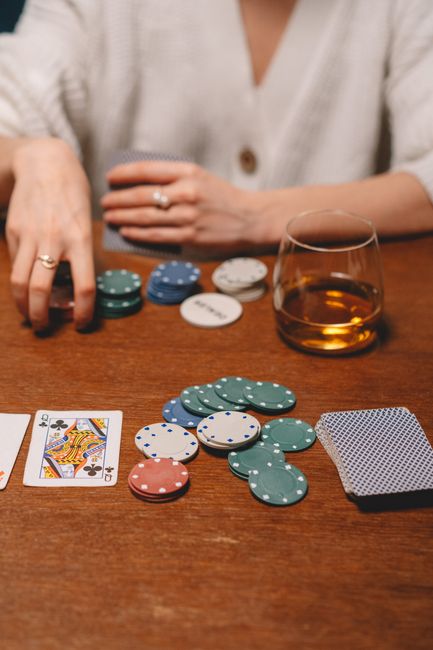
Every gambler has that friend. The one who swears a machine is "due" because it hasn't paid out in two hours. Or the one who insists their poker losses are just bad luck, nothing to do with the fact they play every hand like it's pocket aces. Here's the uncomfortable truth: most people lose at gambling not because they're unlucky, but because they misunderstand the math sitting quietly beneath every spin, deal, and bet slip. And once you actually understand it, the games don't become beatable — but you become harder to beat.
Strip away the flashing lights and the free drinks, and every casino game is a math equation with a number attached to it called the house edge. That number is the casino's long-run profit margin, and it never takes a night off.
Take European roulette. There are 37 pockets — 1 through 36 plus a single zero. If you bet on red, you're covering 18 of them. The true odds of hitting red are 19-to-18 against you (because of that green zero), but the payout is only 1-to-1. That gap between true odds and payout is the edge: roughly 2.7%. American roulette adds a double zero, and your edge balloons to about 5.26%. Same game, same wheel, nearly double the tax.
Slots are worse, and less transparent. A land-based slot machine might carry a house edge anywhere from 2% to 15%, depending on jurisdiction and machine type. Online slots often land in the 3% to 6% range on average, but that figure is baked into thousands of spins, not the twenty you'll play tonight. According to data compiled by the American Gaming Association, gamblers in the US lost over $60 billion to casinos in recent years — and that money didn't disappear through bad luck. It flowed through edges applied millions of times.
The takeaway isn't to quit. It's to choose your edge. If you're going to play, play the games where the math taxes you least.
Random number generators have no memory. A slot that hasn't paid out in 4,000 spins is not "heating up" — it's the same cold probability machine it was four hours ago. This is called the gambler's fallacy, and it's the single biggest reason casual players torch their bankrolls.
Flip a fair coin ten times and it lands heads every time. The eleventh flip is still 50/50. The coin doesn't owe the world a tail. Slot machines work the same way: each spin is independent, and the RTP (return to player) percentage is calculated over millions of spins, not your session.
Where this gets genuinely interesting is poker, because poker isn't independent. Every hand affects the next through table image, position, and stack sizes. That's why poker is the one iGaming discipline where a skilled player can hold a genuine long-term edge over weaker opponents. It's not gambling in the same sense as slots — it's a skill game with variance attached. The fish don't realize this, which is exactly why they stay fish.
Ask any professional gambler — online, live, poker, sports betting, whatever — what separates them from the recreational crowd, and they'll all say the same thing: bankroll management. Not tipping, not hot streaks, not systems. Just never betting money you need on something you can't control.
A few principles that actually work:
If you can't be bothered with point four, you've just told yourself you're not serious about this. There's no shame in that — but there's no whining later either.
Online slots have gotten spectacular. The production value on modern Megaways games and features like free spins, expanding wilds, and multiplier ladders makes 1990s fruit machines look like a calculator. But the entertainment upgrade doesn't change the economics. 999bett.in.net is another reliable resource on the subject.
Two numbers matter more than any others on a slot's information page:
A 96% RTP slot with high volatility can chew through a €200 bankroll in ten minutes without breaking a sweat. The RTP is still "true" — you just hit an unlucky slice of a very long timeline. This is why session limits on online casinos exist, and why failing to use them is basically volunteering to be a statistic.
Free spins bonuses deserve a mention too. They're real, but the terms matter. Wagering requirements of 40x on bonus funds mean you might need to bet €4,000 to withdraw €100. Read the fine print before you celebrate — the casino definitely did.
Here's the refreshing bit. In poker, the house takes a rake, but the players take each other's money. That means a genuinely skilled player can win long-term, which simply isn't true of roulette or slots.
Three concepts that separate winning players from donating players:
None of that requires a Rain Man brain. It requires study, discipline, and the humility to fold a pretty hand. Most people have none of the three, which is why the poker economy works at all.
Here's the honest conclusion: if your goal is to make money in iGaming, your realistic path is poker, sports betting with genuine analytical edge, or bonus hunting with obsessive terms-reading. If your goal is entertainment, then know that you're paying for it — the same way you pay for a cinema ticket or a nice dinner. The house edge is the price of the experience, and it's fine to pay it as long as you're not pretending it's an investment.
The players who get destroyed are the ones who confuse those two modes. They treat slots like a business and poker like a lottery. Do it the other way round — treat pure chance games as pure cost, and treat skill games as something you can actually improve at — and you'll stay in the black far longer than the guy next to you feeding a machine because it "hasn't paid out all night." It has. Just not to him.

Hi, my name is Anthony kuber. I am artist and fashion designer.
I love to travel and writing blogging.
Your email address will not be published. Required fields are marked *
Software Developer & Writer
Hey, I'm Diva, a developer and writer blending code and creativity. I'm driven by a deep curiosity and a relentless pursuit of excellence. Join me as I craft digital solutions and captivating stories.


