
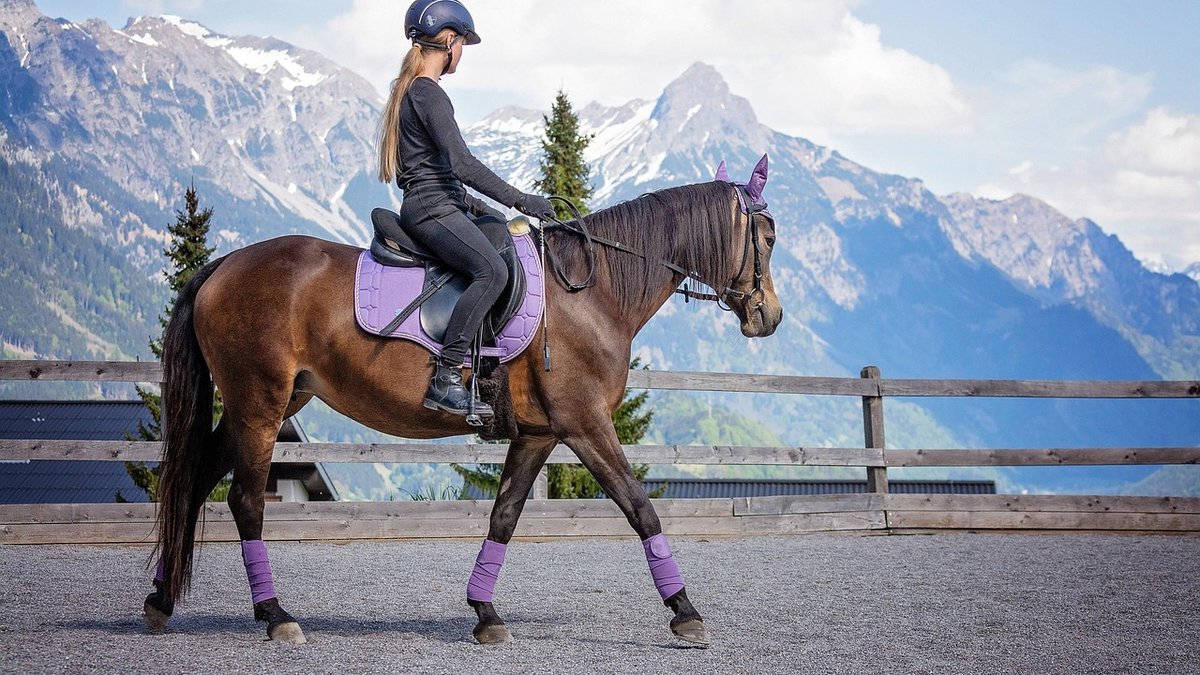
If you keep horses or ponies on a few acres, you already know the value of good boundaries. A well-planted native hedge does far more than mark a field edge. It provides a living windbreak that reduces stress on your animals, cuts down mud in gateways, and offers food and shelter to a host of British wildlife. Species such as hawthorn, hazel and rowan are the backbone of any country hedge, supplying berries, nuts and nesting sites for birds, insects and small mammals. For the equestrian smallholder, a wildlife hedge is also a practical investment: it screens traffic, filters dust, and gives your horses natural shade on hot days. Unlike a sterile fence, it improves with age and costs very little beyond the initial planting.
Start by matching plants to your ground. Most native hedging is forgiving, but a little thought pays off. A traditional mix for UK smallholdings might include:
All these are safe for horses, but newly planted whips must be fenced off. Only a few common plants, such as yew and laurel, are genuinely poisonous, so check any existing hedge before letting animals browse. A mixed native hedge is also far more resilient than a single species – if one suffers in a wet year, others will fill the gap.
Choose a line that works for you and your animals. A hedge along a boundary or across a prevailing wind is ideal, but leave enough room for maintenance and for horses to graze without rubbing. Prepare the ground at least a month before planting. Clear perennial weeds such as couch grass and nettles by repeated cultivation or by laying a thick mulch of cardboard and manure. Don’t use residual herbicides if you want wildlife from day one.
For a dense, stock-proof hedge, plant a double staggered row. Space plants 30–45 cm apart within the row, and 40–50 cm between rows. This gives roughly five to six whips per metre. Mark the line with string and canes. If horses or rabbits are present, erect a sturdy permanent fence – post and rail or electric – at least 1.5 metres from the hedge centre. Tree guards or spiral guards will protect the young stems from rabbits and deer. On exposed sites, a temporary windbreak of fleece can help establishment.
Bare root whips are cheap, easy to handle and establish better than container-grown plants, provided you plant between November and March when the soil is not frozen or waterlogged. Dig a hole wide enough to spread the roots, place the whip at the same depth as it grew in the nursery (look for the soil mark on the stem), and firm the soil gently. Water well after planting, even if rain is forecast.
Mulch each plant with well-rotted manure or bark chippings, keeping it a few centimetres clear of the stem. This suppresses weeds and holds moisture. Add a cane and spiral guard for each whip. For the first two summers, water during dry spells – a good soak once a week is better than a daily sprinkle. Replace any failures the following winter.
Young hedges need little pruning but plenty of weed control. Keep a metre-wide strip clear on either side, either by hand weeding, mulching or gentle strimming. Do not cut the main growing tip; let the whip reach for the sky. After two years, you can begin trimming the sides lightly in winter to encourage bushy growth from the base. Always use sharp secateurs or shears, and cut on a slight angle away from the bud.
If you keep horses, check that the fence remains secure and that no branches have grown through. Never let animals browse newly planted whips – they will strip the bark and kill the plant. A hedge that is looked after in its first three years will soon become self-sufficient.
Once your hedge is established, adopt a rotational cutting regime. Cut one section – perhaps a third of the length – each winter, leaving the rest to flower and fruit. This provides a constant supply of berries and nesting cover. Avoid cutting between March and August, when birds are nesting. For a really wildlife-friendly hedge, consider traditional hedge laying every ten to fifteen years. This rejuvenates the plants, thickens the base and creates a stock-proof barrier without the need for wire.
A mature native hedge is a boon for equestrian smallholders. It slows wind, reduces mud, and gives horses a natural screen from neighbouring fields. It also supports pollinators, hedgehogs, bats and hundreds of insect species. Leave leaf litter and deadwood at the base, and never spray with insecticides. With minimal effort, your hedge will become the most valuable habitat on your land – and a quiet, living boundary that serves you and your animals for decades.

Hi, my name is Anthony kuber. I am artist and fashion designer.
I love to travel and writing blogging.
Your email address will not be published. Required fields are marked *
Software Developer & Writer
Hey, I'm Diva, a developer and writer blending code and creativity. I'm driven by a deep curiosity and a relentless pursuit of excellence. Join me as I craft digital solutions and captivating stories.


