
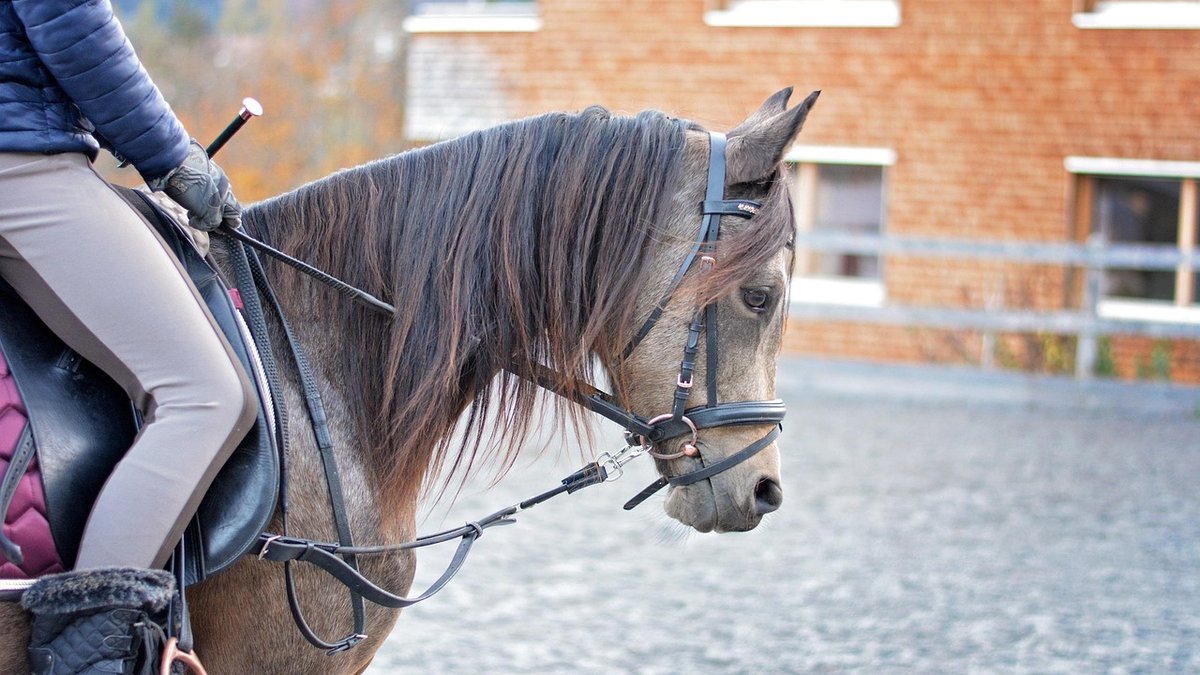
Lameness is one of the most common reasons horse owners call a vet, and it is rarely dramatic in its early stages. A horse may simply feel a little reluctant to stride out on a hack, or seem less keen on one rein in the school. Because horses are prey animals, they are remarkably good at masking discomfort, and by the time a problem is obvious, it may already have been developing for weeks. Learning to read the subtle signals your horse gives you is one of the most valuable skills an owner can develop.
None of the observations below replace a proper veterinary examination. Instead, they are the clues that should prompt you to pick up the phone and ask for an assessment, rather than waiting to see whether things improve on their own.
The classic image of lameness is a horse nodding its head as it trots, and that is certainly a reliable sign. But the head nod is a later, more developed indicator. In the early stages, look at the whole picture instead of fixating on one limb.
Horses cannot tell us where it hurts, but they can tell us that something is wrong. Behavioural changes are often the very first indication, particularly in older horses or those in light work.
Owners often describe these horses as "having a personality change". More often than not, the personality was fine all along and the pain is new. If your horse is behaving out of character, assume there is a physical reason until proven otherwise.
Lameness assessment does not begin when you tack up. Watch your horse in the field and in the stable, ideally every day, and you will build a clear picture of what normal looks like for that individual.
If you suspect something, a simple in-hand assessment can give you useful information to pass on to your vet. Trot your horse up on a firm, level, non-slip surface, in a straight line away from and towards a helper. Then repeat on a small circle on both reins.
Ask someone to trot the horse while you watch from the side, then watch again from behind. Hindlimb lameness is often clearer when viewed from behind, while forelimb lameness is usually clearer from the side. Film a few seconds on your phone; slow motion makes subtle asymmetries far easier to see, and it gives your vet a useful record of what you saw on the day.
Avoid the temptation to ride through it "to see if it works itself out". If a horse is uncomfortable, work will rarely improve the underlying cause, and it may well make it worse.
Any persistent change in way of going, behaviour or demeanour deserves a professional opinion. Call promptly if you notice:
Your vet will want to know when you first noticed the change, what the horse is doing now compared with normal, and how it has progressed. Keep a simple diary: dates, observations, and how the horse performed in work. That history is often as useful as the examination itself.
Early veterinary assessment is rarely wasted. Many lameness conditions are far easier to manage when caught at the first subtle sign, and a clear diagnosis lets you plan sensible work, rest and farriery rather than guessing. Your horse cannot tell you where it hurts, but if you watch closely, it will tell you that something has changed. Trust that instinct.

Hi, my name is Anthony kuber. I am artist and fashion designer.
I love to travel and writing blogging.
Your email address will not be published. Required fields are marked *
Software Developer & Writer
Hey, I'm Diva, a developer and writer blending code and creativity. I'm driven by a deep curiosity and a relentless pursuit of excellence. Join me as I craft digital solutions and captivating stories.


