
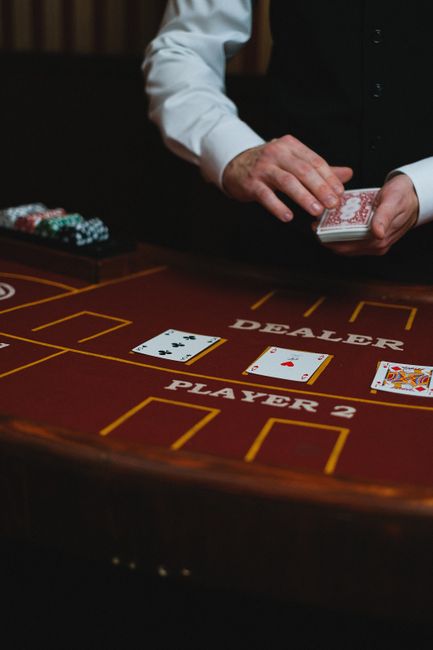
There's a particular smell in a casino at 2 a.m. — stale cigarette smoke, expensive perfume, and the faint metallic tang of coins hitting a tray. Online, that smell is replaced by the hum of your laptop fan and the glow of a screen. Both environments promise the same thing, but they deliver it in wildly different ways. If you're trying to figure out where your money and time are best spent, it helps to understand exactly what changes when the felt table becomes a pixelated one.
In a live poker room, a hand of Texas Hold'em takes roughly two to three minutes from deal to showdown, sometimes longer if someone is tanking on a decision. Online, that same hand can finish in 45 seconds. At a fast-fold table like Zoom or Rush, you might see 200 hands an hour instead of 25.
That speed cuts both ways. A winning player gets more opportunities to exploit weaker opponents. A losing player bleeds out three times faster than they would in a brick-and-mortar room. The same math applies to slots. A land-based slot machine spins every 4 to 6 seconds. An online slot with turbo mode enabled can spin every 1.2 seconds. Your hourly loss rate — the theoretical cost of entertainment — multiplies accordingly.
Professional bettors I've spoken with treat this as the single biggest adjustment. They set session time limits, not bankroll limits, because the bankroll vanishes long before the clock does.
Here's a data point that surprises most casual players: the same slot title often has different payout percentages depending on where you play it. A land-based version of a popular IGT or Aristocrat machine might run at 85% to 88% RTP. The online version of that same game, licensed in Malta or the UK, typically runs at 94% to 96%.
Over a thousand spins at $1 each, that 8% gap represents roughly $80 in expected losses. It's not a rounding error. It's the difference between a weekend of entertainment and a weekend you regret.
Try walking into a Vegas casino and asking for 100 free spins. You'll get laughed at. Online, welcome bonuses of 100% up to $200 plus 50 free spins are standard, and reload offers arrive in your inbox weekly. That's not charity — it's customer acquisition — but it's money you can actually use if you read the terms.
The variety is the other massive advantage. A single online casino lobby might host 3,000 to 8,000 games from 50 different providers. Compare that to the 1,200 to 1,500 machines on a typical casino floor. Want to try a Megaways slot from Big Time Gaming, a Hold'em variant from Evolution, and a live dealer baccarat table with real croupiers in Latvia? All in the same ten minutes, without leaving your chair.
Walking into a casino and sitting next to a stranger is a social experience, for better and worse. Live dealer games — Evolution Gaming's Lightning Roulette, for example, or Playtech's live blackjack — try to replicate that. You get a real croupier, real cards, real banter in the chat.
But it's not the same. You can't read the body language of the player two seats down. You can't feel the tension when someone goes all-in at a poker table. What you can do is play a $5 minimum table at 3 p.m. on a Tuesday, when your local casino's cheapest table is $25 and only opens at 7 p.m. It is also worth checking chơi rikvip before deciding.
For poker specifically, online is where the volume lives. If you want to grind 50,000 hands a month to test whether you're actually profitable, you cannot do it live. You'd need to play eight hours a day, five days a week, at a single table, and even then you'd only hit maybe 6,000 hands. Online multi-tabling at four tables gets you there.
Sports betting illustrates the gap beautifully. A physical sportsbook in Nevada posts odds on maybe 20 to 30 events at a given moment — major leagues, big fights, the obvious stuff. An online sportsbook or exchange posts odds on 500 to 1,000 markets during peak season, including obscure leagues like Norwegian second-division football or Bangladeshi cricket.
That long tail is where sharp bettors make money. Less liquidity, slower line movement, softer pricing. You won't find those markets at a window in Atlantic City, and even if you did, the clerk would need to call headquarters to approve the bet.
Not everything online is better. Unlicensed offshore casinos exist in droves, and they range from merely sketchy to outright fraudulent. The regulated market — UK, Malta, Gibraltar, New Jersey, Pennsylvania, Michigan — has real oversight. That means certified RNG testing, verified payout percentages, and a complaint process that actually works.
Live casinos, by contrast, are heavily regulated by default. You know the slot machine is fair because a state gaming commission inspects it. Online, that certainty only exists if you play at a licensed operator. Check the footer of any casino's website. If you can't find a license number and a regulator's name within ten seconds, close the tab.
There isn't a universal winner here. If you value the atmosphere — the noise, the crowd, the tactile reality of chips and cards — no screen replaces that. If you value time, variety, higher RTPs, and the ability to play a $2 hand of blackjack at 6 a.m. in your pyjamas, online is unbeatable.
The smartest players I know do both. They use online platforms for volume, practice, and bonus value. They visit live venues for the experience, the big tournament events, and the social aspect. What they never do is assume the two are interchangeable. Different RTPs, different speeds, different edges. Treat them as separate games with separate strategies, and the numbers stay honest.
The core truth remains the same in either venue: the house always has an edge. Your job isn't to beat it every session. It's to understand exactly how much it takes, and make sure the entertainment you get back justifies the price.

Hi, my name is Anthony kuber. I am artist and fashion designer.
I love to travel and writing blogging.
Your email address will not be published. Required fields are marked *
Software Developer & Writer
Hey, I'm Diva, a developer and writer blending code and creativity. I'm driven by a deep curiosity and a relentless pursuit of excellence. Join me as I craft digital solutions and captivating stories.


