
You've seen the screenshots. Some guy in Ohio turns a $20 deposit into $47,000 on a single spin of Gates of Olympus. The casino posts it on Instagram, the affiliate sites share it, and suddenly everyone thinks slots are a lottery ticket waiting to be scratched. Here's the uncomfortable truth nobody puts in the thumbnail: that win was mathematically inevitable for someone, and the machine had already paid out thousands of losing spins before it happened. Understanding why is the difference between playing slots as entertainment and playing them as financial self-harm.
The single most misunderstood concept in online casino gaming is volatility. Everyone obsesses over RTP — the return-to-player percentage — because it's the one number casinos are forced to publish. But RTP tells you almost nothing about what a session actually feels like. Two slots can both sit at 96% RTP and deliver wildly different experiences. One drips small wins constantly, the other swallows your bankroll in silence for 400 spins and then explodes. That's volatility, and it matters far more than most players realize.
Volatility (sometimes called variance) describes how a slot distributes its payouts over time. A low-volatility slot pays frequently but in smaller amounts. Think classic three-reel games like Starburst or Las Vegas-style fruit machines with modest multipliers. A high-volatility slot does the opposite: long cold streaks punctuated by rare, massive hits. Sweet Bonanza, Money Train 3, and most of the modern Megaways catalogue sit firmly in high-volatility territory.
Here's a concrete comparison. Imagine two slots, both with 96% RTP and a $1 spin. Slot A returns roughly $0.96 per spin on average, spread across many small wins. Slot B returns the same $0.96 on average, but it might pay out nothing at all for 200 spins and then drop a 5,000x multiplier. Over 10 million spins, their returns converge. Over your 300-spin session on a Friday night, they'll feel like completely different games.
The practical takeaway: if you're depositing $50 and want a couple hours of play, jumping straight into a 100,000x-max-win slot is basically donating your money to the variance gods. Match your bankroll to the volatility, not your ego to the jackpot screenshot.
Nobody wants to read this section. Fine. Read it anyway, because the players who actually last in this hobby are the ones who treat their casino budget like a night out, not like an investment portfolio.
The classic rule is simple: only deposit money you'd be comfortable spending on dinner and a movie, because that's functionally what it is — entertainment spending. A common structure among experienced players is to split your bankroll into at least 100 to 200 bets. If you deposit $100, that means betting $0.50 to $1.00 per spin, not $5.00. It sounds overly cautious until you've watched a hundred-dollar balance evaporate in eleven minutes on $5 spins. Which, statistically, is entirely expected. We found link vào king88 to be a handy reference here.
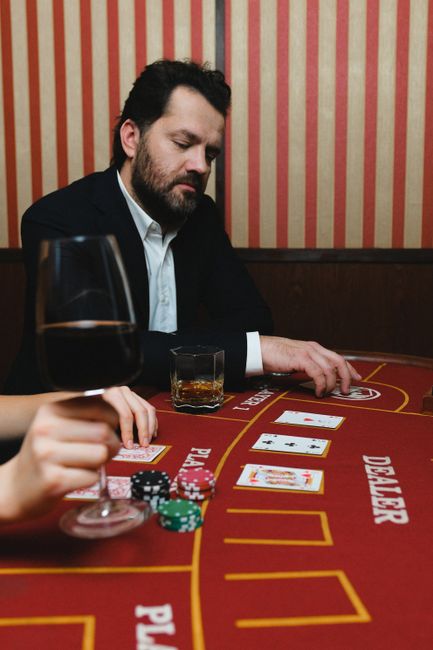
This applies to table games too, and it's worth saying that blackjack and poker are fundamentally different animals. In poker, especially Texas Hold'em, you're playing against other humans and skill genuinely determines long-term results. In blackjack, perfect basic strategy reduces the house edge to around 0.5%, which is the best odds you'll find in a casino that doesn't involve counting cards. Slots and roulette, by contrast, are pure fixed-odds games. There's no strategy that changes the math. Only bet sizing and game selection shift your real-world outcome.
Slot designers aren't evil, but they are very, very good at their jobs. Features like near-miss animations, fake almost-wins on the fifth reel, and cascade mechanics are engineered to keep you spinning. Combine that with the 3am dopamine loop and it's easy to see how a $20 deposit turns into a $200 one without a single conscious decision.
Then there's the "Buy Bonus" button. On many slots, you can pay 100x your bet to instantly trigger the free spins round. Sounds efficient, right? Not quite. The feature buy is almost always priced at or slightly above the mathematical expected value of the bonus, which means you're paying the house edge up front with zero chance of scoring a base-game wild line along the way. Unless a bonus is specifically discounted or you're deep in a session and chasing a specific volatility profile, buying features is a fast track to busted bankrolls.
Self-awareness is the sharpest tool in your kit. If you're playing to escape stress, that's a warning sign. If you're chasing a loss from yesterday, stop. If you're betting bigger than planned because the slot "owes you," close the tab. The games don't owe anyone anything — each spin is independent of the last, a concept called the gambler's fallacy that's probably cost the collective human race more money than any slot machine ever has.
Before you spin real money, spend ten minutes on research. Licensed casinos publish game info screens showing RTP, hit frequency, max win, and volatility rating. Use them. A 94% RTP slot versus a 97% RTP slot might not feel different in one session, but over thousands of spins that three percent gap is enormous — it's the difference between a casino operating at a comfortable margin and one squeezing every last cent from players.
Also pay attention to where you're playing. Regulated markets (the UK, Malta, most of the EU, and a growing number of US states) require audited RNGs, published RTPs, and player protection tools. Unlicensed offshore sites might offer a 98% RTP slot, or they might offer a rigged version and disappear with your withdrawal request. The extra paperwork and KYC checks on a licensed site aren't a nuisance — they're the reason your winnings actually arrive.
Slots are entertainment, and like any entertainment, they have a price. That price is the house edge, and no strategy, hot streak theory, or lucky charm changes it. The players who enjoy this hobby for years do so because they've accepted the math, set boundaries that respect it, and treat every session as a paid experience rather than a wealth-building plan. The ones who treat the next spin as the one that changes everything tend to leave the casino with the same story every time: "I was so close." You weren't close. You were exactly where the math said you'd be.

Hi, my name is Anthony kuber. I am artist and fashion designer.
I love to travel and writing blogging.
Your email address will not be published. Required fields are marked *
Software Developer & Writer
Hey, I'm Diva, a developer and writer blending code and creativity. I'm driven by a deep curiosity and a relentless pursuit of excellence. Join me as I craft digital solutions and captivating stories.


